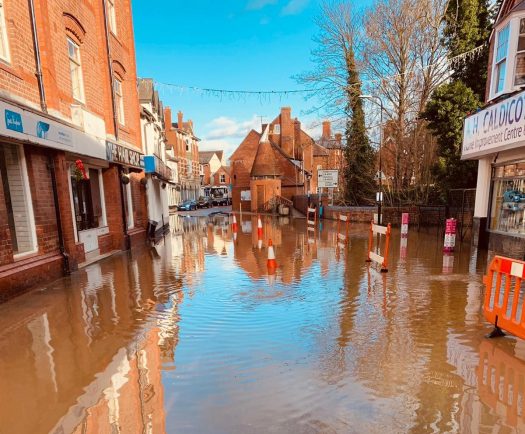
ALTHOUGH Tenbury’s pleas for permanent flood defences remain unanswered, the wall on Market Street which collapsed during last autumn’s floods will be replaced.
Worcestershire County Council (WCC) will begin the works next Monday (February 24) and are expected to finish within approximately two weeks
The county council will now replace the wall, which provided some flood protection for many years before collapsing after the rise of Kyre Brook.
The council has worked with the Environment Agency and other partners to assess the potential to construct a more substantial flood defence structure.
Having concluded that an ‘in between’ option short of a full flood defence scheme was unviable, it was essential to secure a permit from the Environment Agency to ensure the appropriateness of its construction.
The Environment Agency processed the application quickly enabling the construction date to be brought forward.
As the replacement will be built using modern materials, it is expected to be stronger than the previous very old wall.
The new structure will not prevent a very high Kyre Brook from finding its way onto Market Street but will help to slow it down,as the previous wall did.
Councillor Emma Stokes, cabinet member for environment at WCC said: ‘‘I’m delighted the county council is stepping in.
“I hope it encourages the Environment Agency to act promptly to bring a flood defence scheme to Tenbury.
“The collapse of the wall has caused such anguish in the town and there has been considerable frustration about the delay.
“However, it’s important that these things are done properly and that we continue to work together to make this happen.”
County councillor for Tenbury, David Chambers, echoed the positive news but made it clear the new construction is not a permanent solution.
He vowed to continue to lobby for the construction of Tenbury Well’s permanent flood defence scheme which was unveiled in 2020 alongside almost £5 million in funding for its construction.
Despite progress on its design there remains a major gap in funding (between £8m and £13), which the Environment Agency insists it is trying to secure.